
Glossary
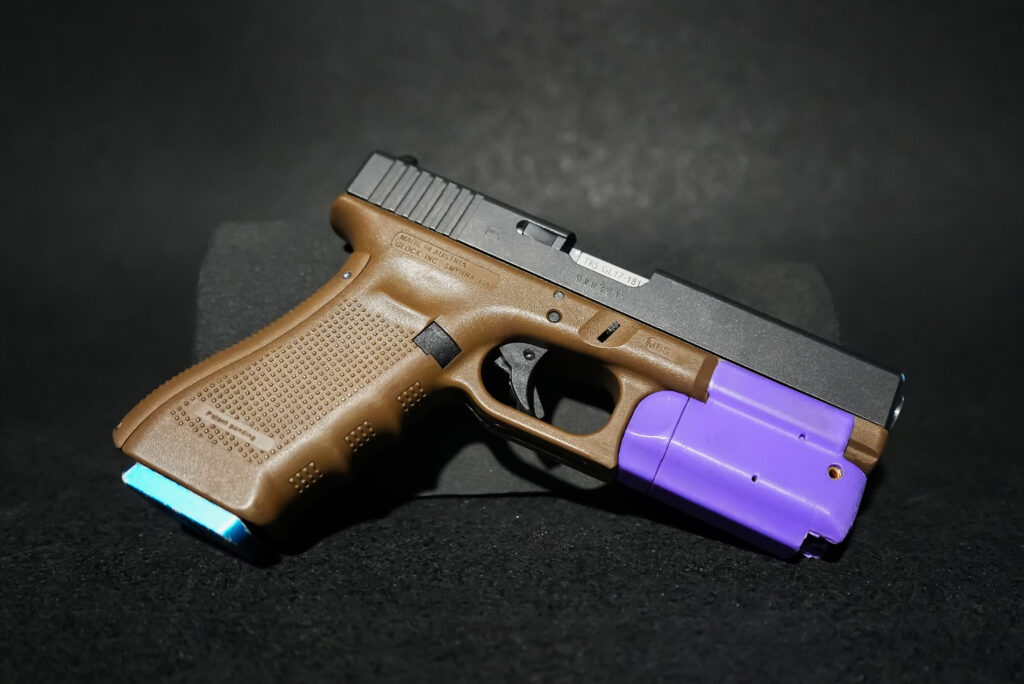
DTAC recoil trainer
A real, serialized firearm that has been permanently or temporarily modified so it cannot chamber, fire, or expel any projectile, and is instead equipped with a kit that generates simulated recoil for training purposes.
Experiences & Courses
Simulated Shooting Range
A controlled training environment that uses DTAC’s recoil trainer. The range mirrors the structure and feel of a traditional shooting lane but uses hyper-realistic recoil, reactive targets, and scenario-driven elements to deliver a safe, high-fidelity shooting experience without projectiles.
360° Spaces
A training environment that requires awareness and control in all directions—front, sides, and behind. Participants must recognize that threats, obstacles, and bystanders can exist anywhere within a full 360-degree sphere and adjust movement, muzzle discipline, and decisions accordingly.
Scenario-Based Training
Decision Tactical’s scenario-based training places participants in hyper-realistic environments mirroring real-world scenarios, using 360° spaces, dynamic lighting, immersive audio, and evolving threat cues. The training focuses on decision-making, communication, and response under pressure, replicating realistic threat cycles without live fire.
Training & Safety
Situational Awareness
The continuous process of observing your environment, identifying potential threats, understanding how conditions are changing, and making informed decisions before danger fully develops. This includes reading body language, scanning for movement, and predicting what might happen next.
Spatial Awareness
The ability to understand your physical position within an environment, recognize the location of threats, teammates, obstacles, and bystanders, and move with purpose while maintaining safe muzzle control and tactical advantage.
FREEZE
A momentary shutdown or hesitation when the brain cannot immediately decide on an action. This instinctive pause can slow reaction time but can be trained.
50% OF PEOPLE FREEZE
FAWN
A stress response where an individual subconsciously attempts to appease, comply, or diffuse a threat through cooperation. In tactical environments, it may appear as over-compliance or emotional over-accommodation.
14% OF PEOPLE FAWN
FLEE
An instinctive attempt to escape danger by creating distance from the threat. While natural, untrained fleeing can lead to unsafe movement or loss of situational advantage.
30% OF PEOPLE FLEE
FIGHT
The defensive response where an individual engages a threat with action — whether through movement, commands, or defensive force. Training refines the fight response into controlled, purposeful decision-making rather than emotional reaction.
6% OF PEOPLE FIGHT
GUN HANDLING
Draw
The process of efficiently and safely removing a pistol from its holster or ready position. The draw stroke includes clearing clothing, establishing grip, presenting the weapon, and preparing to engage a target.
Marksmanship
Marksmanship at Decision Tactical is the disciplined ability to place accurate, intentional shots through proper grip, sight alignment, trigger control, recoil management, and consistent fundamentals—executed under pressure, on the move, and within realistic tactical scenarios.
Aim
Aligning the pistol’s sights with the intended target. Aim includes sight alignment, sight picture, eye focus, and breath control to ensure accurate shot placement.
Flagging
Flagging is the unsafe act of pointing the muzzle of a firearm—real or simulated—at any person or object you do not intend to shoot. It violates basic safety rules.
Fire
The act of pressing the trigger smoothly to discharge a simulated round using the DTAC recoil system. Proper firing involves trigger control, follow-through, and maintaining stability for subsequent shots.
ARMORY STAFF
Armory Captain
The Armory Captain is the on-site mission leader responsible for controlling scenario tempo, maintaining range discipline, and guiding participants through high-stress, decision-making environments. They oversee safety, equipment readiness, scenario briefing/debriefing, and real-time tactical direction to ensure a safe, realistic, and professionally executed training experience.
Equipment & Weapons
DTAC recoil trainer
A real, serialized firearm that has been permanently or temporarily modified so it cannot chamber, fire, or expel any projectile, and is instead equipped with a kit that generates simulated recoil for training purposes.
Experiences & Courses
Simulated Shooting Range
A controlled training environment that uses DTAC’s recoil trainer. The range mirrors the structure and feel of a traditional shooting lane but uses hyper-realistic recoil, reactive targets, and scenario-driven elements to deliver a safe, high-fidelity shooting experience without projectiles.
360° Spaces
A training environment that requires awareness and control in all directions—front, sides, and behind. Participants must recognize that threats, obstacles, and bystanders can exist anywhere within a full 360-degree sphere and adjust movement, muzzle discipline, and decisions accordingly.
Scenario-Based Training
Decision Tactical’s scenario-based training places participants in hyper-realistic environments mirroring real-world scenarios, using 360° spaces, dynamic lighting, immersive audio, and evolving threat cues. The training focuses on decision-making, communication, and response under pressure, replicating realistic threat cycles without live fire.
Training & Safety
Human stress responses that influence decision-making during high-pressure encounters:
FREEZE
A momentary shutdown or hesitation when the brain cannot immediately decide on an action. This instinctive pause can slow reaction time but can be trained.
50% OF PEOPLE FREEZE
FAWN
A stress response where an individual subconsciously attempts to appease, comply, or diffuse a threat through cooperation. In tactical environments, it may appear as over-compliance or emotional over-accommodation.
14% OF PEOPLE FAWN
FLEE
An instinctive attempt to escape danger by creating distance from the threat. While natural, untrained fleeing can lead to unsafe movement or loss of situational advantage.
30% OF PEOPLE FLEE
FIGHT
The defensive response where an individual engages a threat with action — whether through movement, commands, or defensive force. Training refines the fight response into controlled, purposeful decision-making rather than emotional reaction.
6% OF PEOPLE FIGHT
Situational Awareness
The continuous process of observing your environment, identifying potential threats, understanding how conditions are changing, and making informed decisions before danger fully develops. This includes reading body language, scanning for movement, and predicting what might happen next.
Spatial Awareness
The ability to understand your physical position within an environment, recognize the location of threats, teammates, obstacles, and bystanders, and move with purpose while maintaining safe muzzle control and tactical advantage.
GUN HANDLING
Draw
The process of efficiently and safely removing a pistol from its holster or ready position. The draw stroke includes clearing clothing, establishing grip, presenting the weapon, and preparing to engage a target.
Aim
Aligning the pistol’s sights with the intended target. Aim includes sight alignment, sight picture, eye focus, and breath control to ensure accurate shot placement.
Fire
The act of pressing the trigger smoothly to discharge a simulated round using the DTAC recoil system. Proper firing involves trigger control, follow-through, and maintaining stability for subsequent shots.
Marksmanship
Marksmanship at Decision Tactical is the disciplined ability to place accurate, intentional shots through proper grip, sight alignment, trigger control, recoil management, and consistent fundamentals—executed under pressure, on the move, and within realistic tactical scenarios.
Flagging
Flagging is the unsafe act of pointing the muzzle of a firearm—real or simulated—at any person or object you do not intend to shoot. It violates basic safety rules.
ARMORY STAFF
Armory Captain
The Armory Captain is the on-site mission leader responsible for controlling scenario tempo, maintaining range discipline, and guiding participants through high-stress, decision-making environments. They oversee safety, equipment readiness, scenario briefing/debriefing, and real-time tactical direction to ensure a safe, realistic, and professionally executed training experience.